Springwood Infant and Juniors School Federation
English
Intent
At Springwood Federation, we believe that an engaging English curriculum will develop children’s love of reading, writing and discussion. We aim to inspire an appreciation of our rich and varied literary heritage and a habit of reading for pleasure, widely and often. We recognise the importance of nurturing a culture where children take pride in their writing, can write clearly and accurately, using the mechanics of good literacy and adapt their language and style to suit range of contexts.
Children will explain their authorial choices and the impact these have on the reader. Our interconnected curriculum allows pupils to embed their skills throughout the curriculum and inspires children to be confident in the art of speaking and listening; encouraging them to use discussion to communicate and further their learning.
We believe that children need to develop a secure grasp of skills and knowledge in English; following a clear pathway of progression as they advance through the primary curriculum. We believe that a firm grasp of literacy skills is crucial to accessing all education and these will give our children the tools they need to enjoy learning and to participate fully as a member of society.
Implementation
The overarching aim for English in the national curriculum is to promote high standards of language and literacy by equipping pupils with a strong command of the spoken and written word, and to develop their love of literature through widespread reading for enjoyment.
Our text-led curriculum is at the centre of our Learning Quest approach to our curriculum. A text driver is chosen and a wide range of supporting, or parallel texts are selected to ensure that all children experience a breadth of text style and genre. Our curriculum closely follows the aims of the National Curriculum for English and we use the Hampshire Assessment Model to ensure that children meet curriculum phased expectations, with a specific focus on using Pen Portraits to ensure foundational knowledge is secure in reading and writing.
The National Curriculum for English aims to ensure that all pupils:
● read easily, fluently and with good understanding
● develop the habit of reading widely and often, for both pleasure and information
● acquire a wide vocabulary, an understanding of grammar and knowledge of linguistic conventions for reading, writing and spoken language
● appreciate our rich and varied literary heritage
● write clearly, accurately and coherently, adapting their language and style in and for a range of contexts, purposes and audiences
● use discussion in order to learn; they should be able to elaborate and explain clearly their understanding and ideas
● are competent in the arts of speaking and listening, making formal presentations, demonstrating to others and participating in debate.
Impact
As a result we are building a community of enthusiastic readers and writers who enjoy showcasing their developing English knowledge and skills. They are confident to take risks in their reading and writing in English and across the wider curriculum. They enjoy discussing and sharing their ideas.
Our attainment is now just below National in reading by the end of Key Stage 2. This has increased by 17% over the last three years.
Our attainment is in line with National in writing by the end of Key stage 2. This has increased by 21% over the last three years.
Our attainment is above National in GPS by the end of Key stage 2. This has increased by 20% over the last three years.
Governors, through the Governor Monitoring Plan and Subject Leader Reports, evaluate the work of the English leader in ensuring that the quality of teaching and learning across the federation is at least good. They ensure that pupils are ready for transition to secondary school and are equipped with the skills to flourish and succeed as caring individuals.
Phonics
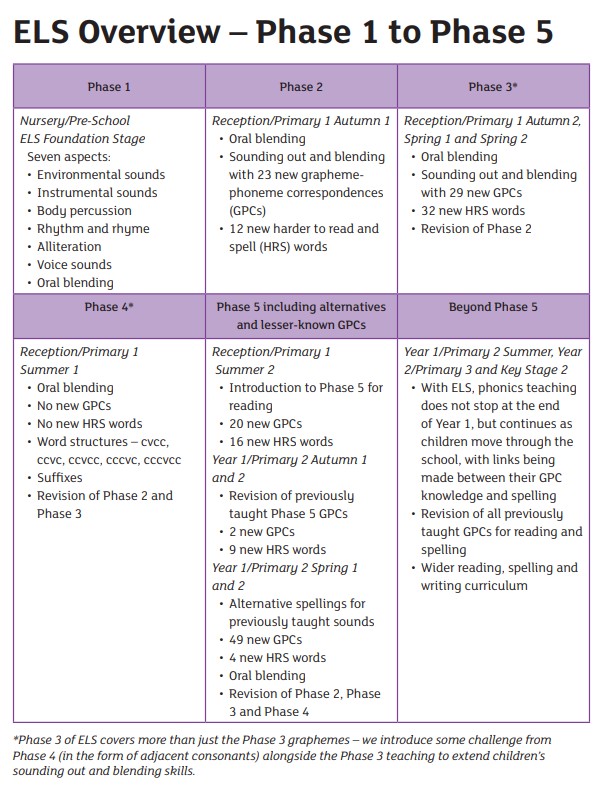
At Springwood Federation, we are committed to providing high-quality phonics teaching that enables every child to become a confident, fluent reader. We follow the Essential Letters and Sounds (ELS) phonics programme with personalised, appropriate variation to the scheme to ensure a consistent, structured and engaging approach across the federation.
The principles of ELS are based upon:
-
The delivery of whole-class, high-quality first teaching with well-structured daily lesson plans
-
The use of consistent terminology by teachers, children and parents
-
The use of consistent resources that support effective teaching
-
Repetition and reinforcement of learning
-
Regular and manageable assessment to ensure that all children ‘keep up’ rather than ‘catch up’
Visit our Phonics Page to find out more information >>>> Phonics
Handwriting
At Springwood Federation, we are very proud of the progress our children make with their handwriting and the particular care they take with their handwriting style.
We use Letter-Join’s online handwriting resource (https://www.letterjoin.co.uk/) and Lesson Planners as the basis of our handwriting policy as it covers all the requirements of the National Curriculum.
Please encourage your child to use this letter formation in all writing they complete at home.
Handwriting is a basic skill that influences the quality of work throughout the curriculum. By the end of Key Stage 2 all pupils should have the ability to produce fluent, legible and, eventually, speedy joined-up handwriting, and to understand the different forms of handwriting used for different purposes.
Our intention is to make handwriting an automatic process that does not interfere with creative and cognitive thinking. This is why we teach pre-cursive handwriting from the middle of reception.
Letter-join is a whole school handwriting scheme offering a combination of traditional and digital resources. These include classroom presentations, handwriting activities, online games and hundreds of worksheets using either a printed font (for those in the early stages of writing), and then our chosen cursive font with a lead-in line.
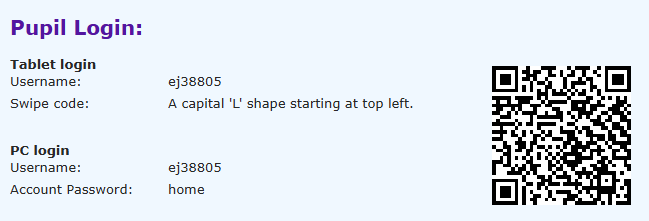
Login to use LetterJoin at home: letterjoin.co.uk/log-in
Spelling
ELS Essential Spelling
ELS Essential Spelling supports the crucial transition from phonics to more advanced spelling. Designed for Year 2 pupils, it offers a systematic, phonics based approach that builds directly on the Essential Letters and Sounds (ELS) framework used throughout Reception and Key Stage 1.
ELS teaches children how sounds correspond to written letters and how to blend these to read words. ELS Essential Spelling extends this learning by focusing on spelling accuracy, confidence and word understanding, preparing children for the demands of Key Stage 2 writing.
Children are taught to develop their spelling through:
-
Spelling patterns rooted in phonics, morphology and etymology
-
Decoding and blending skills to support reading, which in turn strengthens encoding and spelling
-
Vocabulary and word meaning, including homophones and contextbased learning, to reinforce correct spelling choices
Lessons follow the familiar structure of the ELS phonics teaching programme, ensuring consistency and continuity for all pupils.
The programme provides full coverage of the Year 2 National Curriculum spelling requirements.
Essential Spelling and Word Knowledge
Essential Spelling and Word Knowledge is a comprehensive spelling programme for pupils in Years 3–6. It focuses on morphology (the structure of words) and etymology (the origins of words), helping children develop a deeper understanding of how words are built and what they mean.
Building on the clear and consistent structure of the ELS phonics programme, Essential Spelling provides full coverage of the National Curriculum spelling requirements.
Children learn using morpheme matrices, which support them in exploring word origins, spelling patterns, and the relationships between morphemes. This approach not only helps pupils to spell accurately but also to understand why words are spelled the way they are.
The programme is taught using a wholeclass approach, ensuring that every child is supported to achieve spelling success.
Reading
At Springwood Federation, children learn to read in both Guided Reading sessions and as part of the English learning Journey and to apply and develop these skills across the entire curriculum. In whole class discussions (Book Talk) and in small guided groups, children learn to discuss and develop their understanding of fiction and non-fiction texts with a specific focus on developing reading fluency and stamina.
Classroom book areas are well resourced with engaging, up-to-date texts which invite the children to read widely and develop a love of reading. We also have a very well-equipped, inviting library which is open to children to visit once a week to enjoy reading and choose a book to take home.
Our planning follows the HIAS English 3 Phased Approach and the Pen Portraits for each year group.
Writing
Our planning follows the HIAS English 3 Phased Approach and the Pen Portraits for each year group.
Stimulate and Generate, Capture, Sift and Sort and Create, Refine and Evaluate.
Teachers will model writing construction at all stages, ensuring the metacognitive processes are shared, whether this is one sentence or a complete form.
Stimulate and Generate: is an opportunity to delve into the text driver (this can be a film, a poem, an advert, a novel, a non-fiction text etc.) and become immersed in the world through discussion, drama and book talk.
Capture, Sift and Sort is a time for children to practise the skills needed to write. This includes grammar, sentence construction, spelling and phonics as well as the opportunity to write at length during one, or more apprentice writes.
During the Create, Refine and Evaluate stage, children will draft, write and evaluate their ‘final’ outcome; teachers will model as appropriate and address misconceptions throughout.